Therapies
At Marjory Kinnon School, we are committed to supporting the emotional well-being and personal development of every student. Our pastoral care team works closely with students and families to provide tailored interventions that promote confidence, resilience, and positive behaviour.
To achieve this, we invest heavily in our therapeutic provision to address complex barriers to learning and support pupils in making the best progress possible. We offer a wide range of specialist interventions, including one-to-one and group sessions – to help students develop social skills, emotional regulation, and a sense of achievement.
Occupational Therapy (OT)
Occupational Therapy in school is focused on a child’s sensory, physical, cognitive, social and emotional development.

Children have an innate desire to explore and play. Interventions are delivered in the form of play so that children’s sensory and motor deficits are addressed while having fun. Occupational Therapy is delivered through 1:1 sessions, groups, classroom adaptations, training teaching staff, developing therapy programmes and liaising with parents. The aim of Occupational Therapy is to support children to develop skills to participate in daily meaningful tasks and gain functional independence.
Occupational Therapy focusses on:
- Fine Motor Skills (handwriting)
- Gross Motor Skills (posture, sitting)
- Visual Motor Perceptual Skills (bilateral integration, eye hand coordination)
- Sensory needs (self-regulation, sensory diet, using sensory room)
- Activities of Daily Living (eating, dressing, toileting, building routines)
- Social Skills (peer interaction, turn taking, play skills)
- Adaptive equipment (weighed blankets, ear defenders, wobble cushion)
Here are some Home Activity Programmes to support continued development in everyday settings.
Speech and Language Therapy (SALT)

Speech & Language Therapy
At MKS, we believe every pupil has the right to communicate in ways that are comfortable and meaningful to them.
Our on-site Speech and Language Therapy (SALT) team works closely with teaching staff to support pupils' communication across the school day. This helps them to build relationships, take part in learning and develop their independence.
We aim to make communication part of everyday school life so that pupils can develop their language skills in real, meaningful situations.
Areas we support
We support a wide range of communication needs, including:
- Understanding language (comprehension)
- Using words and sentences (vocabulary and sentence structure)
- Speech clarity and fluency
- Social communication (interacting, connecting and sharing with others)
- AAC (Augmentative and Alternative Communication – ways to communicate without speech such as symbols, communication boards or devices)
We recognise and value the importance of:
- acknowledging and building on each pupil’s strengths
- supporting pupils to express themselves in their own way
- developing pupil’s confidence, self-esteem and self-advocacy
- setting personalised targets based on each pupil’s interests and needs.
Communication across the school
Communication support is woven throughout the school day. Some examples include:
- Frequent training opportunities for staff - including a weekly Makaton clinic.
- Large communication boards placed in key areas across the school, such as the library, playground, sports hall and sensory rooms.
- A communication café where pupils can practise being both customers and employees.
- ‘Squash Day’ – a weekly event held in both the primary and secondary playgrounds where pupils can request a drink during their morning break.
- MKS 50 Core Makaton signs – please refer to our booklet of signs which can be accessed here.
- Support for the wider school team to embed a range of approaches during timetabled communication sessions.
Support for families
We value working in partnership with families and offer the following:
- Parent workshops on a range of communication topics
- Therapy coffee mornings
- Opportunities for feedback following a period of intervention
- An 'open-door' approach where parents are invited to contact SALT directly at any time to discuss concerns or seek advice
Additional Support
Horticulture
At Marjory Kinnon, we believe in the powerful therapeutic benefits of gardening and outdoor learning. Nature has a calming, grounding effect — and for many of our pupils, working with plants and spending time outdoors can be a truly meaningful way to learn and grow.
Our school is lucky to have a large allotment, polytunnel and Eco Garden, where fruits, vegetables, herbs, and flowers are grown all year round. This peaceful and purposeful space gives pupils the chance to connect with the natural world in a hands-on way. We invite you to watch our Vegetable Song Video

Through 1:1 and small group sessions, our specialist horticulture staff guide children in activities like planting, digging, watering, composting, harvesting — and even cooking with the food they’ve grown. These sessions are carefully tailored to meet each child’s needs and are designed to support emotional wellbeing, communication, independence, and sensory regulation.
Horticulture Therapy can help pupils to:
- Develop practical life skills
- Improve fine and gross motor coordination
- Build confidence and responsibility
- Reduce anxiety and increase focus
- Work cooperatively with others
- Connect to the environment in meaningful ways
We see the garden as more than just a space to grow plants — it’s a space where children grow, too.
Music

At Marjory Kinnon, we know that music is a powerful way to connect — especially for children who find it hard to express themselves with words. That’s why we offer music as part of our support for pupils.
We use music — singing, playing instruments, making sounds — to help children communicate, build confidence, and express how they feel. The sessions focus on forming a trusting, supportive relationship through live music-making and play.
What makes music so special is that it doesn’t rely on talking. For autistic children, or those with other communication needs, it can open up new ways to connect with the world around them. Every child’s session is unique and tailored to their interests and needs — and often, the music is completely improvised, allowing your child to lead the way.
Music can help children to:
- Communicate and interact with others
- Build confidence and independence
- Understand and express their feelings
- Improve attention and concentration
- Become more aware of themselves and the people around them
Every child has the potential to respond to music to open new pathways for connection, learning, and growth — one note at a time.
Sports
At Marjory Kinnon, we understand the strong connection between physical activity and mental wellbeing. Movement isn’t just good for the body — it’s also a powerful way to boost mood, build confidence, and support emotional health.
Our specialist PE teachers offer 1:1 Sports Therapy sessions for selected pupils who may benefit from extra support with their mental wellbeing. These sessions are designed to be encouraging, low-pressure, and fun, with a focus on positive experiences through physical activity.
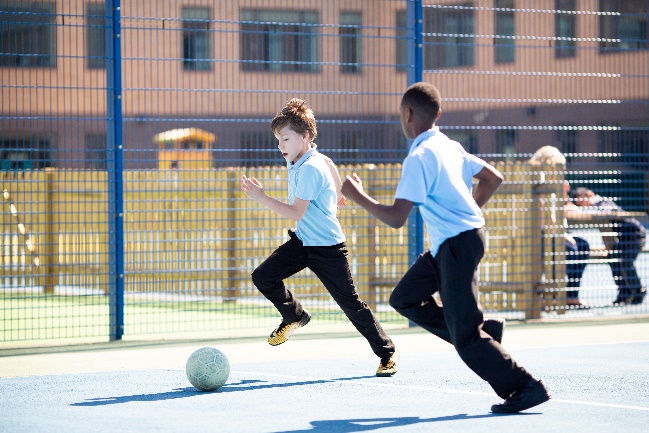
Whether it’s through running, ball games, fitness challenges, or simply getting moving in a way that feels right for each child, Sports Therapy helps pupils release energy, reduce stress, and feel good about themselves.
Sports Therapy can support children to:
- Improve self-esteem and confidence
- Develop physical coordination and body awareness
- Reduce anxiety and manage emotions
- Build resilience and perseverance
- Enjoy success through achievable, individualised goals
Through movement and play, we help pupils reconnect with their strengths — both physically and emotionally.
Therapy Dog – Rumi
We are proud to have a trained Therapy Dog, Rumi, as part of our wellbeing offer. Our friendly four-legged team member plays a special role in helping pupils feel calm, safe, and connected.
Time with Rumi is offered through structured sessions or informal visits, providing comfort and companionship in a gentle, non-judgmental way. These interactions can be especially beneficial for pupils who experience anxiety, emotional regulation challenges, or difficulties with social interaction.
Spending time with Rumi can help children to:
- Reduce stress and anxiety
- Improve mood and emotional regulation
- Build trust and empathy
- Boost confidence in communication
- Feel more settled and ready to learn
For many pupils, Rumi becomes a valued friend — and a welcome moment of calm in the school day.

Thrive and Nurture
We are proud to be a Thrive School, with a trauma-informed approach that places mental health and emotional wellbeing at the heart of everything we do. Our commitment to nurturing the whole child is central to our mission of helping every pupil overcome barriers to learning and reach their full potential.
We have a dedicated Thrive and Nurture resource base, staffed by trained Thrive practitioners, where children access individual or group interventions tailored to their emotional developmental needs. These sessions help pupils develop the confidence, emotional literacy, and resilience needed to thrive both in and beyond the classroom.
Our approach is woven throughout the school:
- All teachers are trained in the Thrive approach and use class-based assessments to create action plans that support each child’s wellbeing.
- We have a purpose-built nurture group classroom, led by a trained Nurture Group Teacher and Thrive practitioners, offering a safe and structured environment where pupils can build trusting relationships and practise positive interactions.
Thrive and Nurture support can help pupils to:
- Understand and manage emotions
- Build friendships and social skills
- Develop self-confidence and resilience
- Feel secure, safe, and understood
- Re-engage with learning in the classroom
By putting wellbeing first, we create the foundations for personal growth, emotional strength, and academic success.